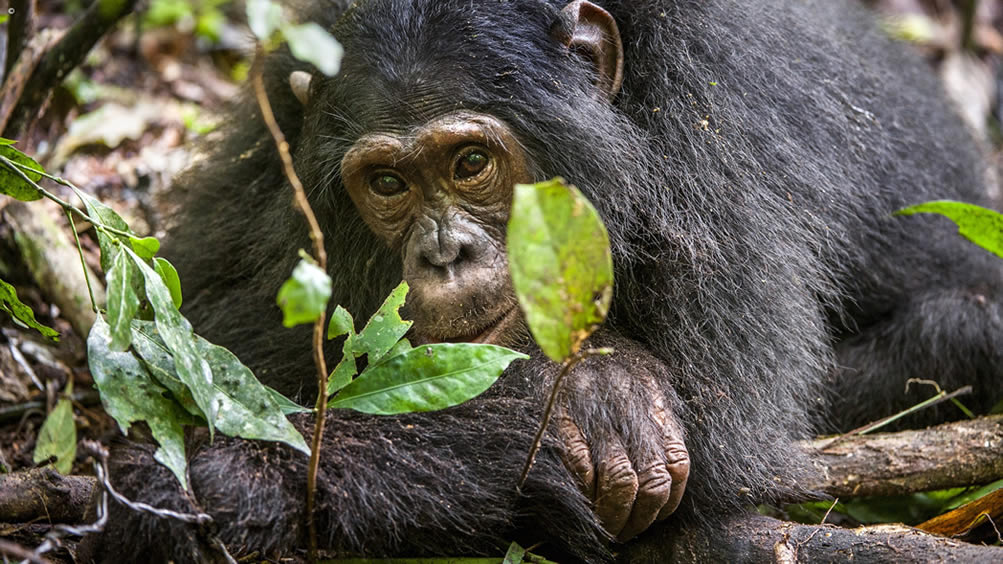
Best Time To Go Chimpanzee Tracking In Kibale
Are you planning to visit Kibale Forest National Park for chimpanzee trekking but wondering when to go? Besides mountain gorilla safaris, Uganda offer yet exceptional primate adventures for you to explore while on your safari. Situated in Western Uganda, East Africa, Kibale Forest National Park has been described as the capital of the primates in the world. The park offers refuge to mainly 13 primate species including over 1500 chimpanzees out of the 5000 individuals that are confined within Uganda making chimpanzee trekking and Habituation Experience (CHEX) its main tourist attractions.
These primates share about 98.7% of their DNA with humans. Trekking these rare apes also rewards visitors with stunning views of other primates like the rare L’Hoests, Black and white colobus monkeys, endangered Red colobus monkeys, olive baboons and many more. Besides the park also offers refuge to more than 325 bird species, four felids, 70 mammal species and over 250 species of trees. Kibale National Park is dominated by moist evergreen and semi deciduous forest. The large part of this forest was logged at the time of when it was a forest reserve and some exotic tree species were planted in plantations especially the pines and eucalyptus.
Ever since the area was gazetted as a national park, most of these introduced trees have been removed and logging has stopped. Kibale is highest at the park’s Northern tip and it stands at altitude 1590 meters above sea level. The lowest point is at 1100 meters on the floor of the Albertine Rift Valley to the South.
If you are planning to visit Kibale Forest National Park, it is important that you take note of best time to track these unique apes in their natural habitats. Trekking adventures in Kibale National Park is an all year round experience but the best time to visit is during the dry season which starts from the months of June to September and then from December to February and these are drier and hottest months but the best season for chimpanzee trekking. The forest is also less thick making it easier to sight these incredible apes.
There is also much sunshine at this period and less rain and because of it is a peak season, most tourists flock for this adventure but most importantly the park doesn’t become crowded. From March to May and towards the end of September to November mark the rainy season where wildlife viewing is a bit challenging but it is perfect for birding safaris especially those who wish to look out for the rare Green breasted pitta-the only second pitta in the whole of African continent that can be sighted within the tropical rain forest of Kibale National Park. For tourists who part take a 2 to 3 day safari, they have a higher opportunity to view the wild chimpanzees in the park.
Briefly, the best time to visit falls in the month of June, July, August and September and December, January and February. At this season, it is also a peak season and the trails are kept relatively drier, making chimpanzee trekking a bit simpler. The peak season starts from June to September and the Lower season is in the month of March, April, May and November and it is characterized by heavy rainfall. Best weather conditions start from the months of June, July and December to February which comes with less rainfall. The worst weather conditions are in the months of March, April and May and at the end of September to November which comes with heavy rainfall and the trails are muddy for tourists to track chimpanzees.
In conclusion, Kibale Forest National Park is Uganda’s best protected area for chimpanzee trekking safaris. Trekking these endangered apes in the wild is the most exciting and interesting experience anyone should include in his or her travel itinerary in Uganda. Trekking these apes in wild is a unique experience unlike those in zoos which is why visiting Kibale National Park is a must for you to view our closest relatives.
Read More
5 Popular Adventure Activities Not to Miss in Uganda
Uganda ranks best in Africa when it comes to African safaris but still the country is full of amazing attractions that you can get involved in for an amazing holiday. The Pearl of Africa is exciting and its natural resources attract thousands to the country all year.However, Uganda is also blessed with various opportunities like volunteerism, business ventures and much more but for adventurers, the country is just packed with awesome experiences including that you have always looked for. Here is a list of the most famous Uganda attractions that you shouldn’t miss out and some make others come back to Africa for exceptional tour adventures.
Gorilla Trekking in Bwindi Forest
The main reason for most visitors to Uganda and if you ever ask someone why I should go to Uganda, gorilla tracking in Bwindi Forest will definitely be the answer. Bwindi Impenetrable Forest offers the greatest gorilla tracking experience on earth despite the existence of other gorilla tracking spots like Mgahinga Gorilla National Park, Volcanoes National Park,Virunga National Park and Kahuzi Biega National Park. It’s a home of the most attractive primates in the world and a huge number of them reside here. Bwindi Forest also has Uganda ancient people that have never been changed by the western world and till present still leave in the ancient.The Batwa People of the forest are brave, great hunters but culture and Bwindi forest is a priority in their lives. They support gorilla tourism and conservation the reason they vacated their ancestral home to a new allocated homestead. There is a list of things to do in Bwindi Impenetrable Forest but the gorilla trekking safari in the impenetrable jungle is simply the best.
Chimpanzee Trekking in Kibale Forest
Just like gorilla tracking, tourists on chimpanzee viewing trips are requested to book their Chimpanzee trekking permits in advance due to the steep demand. Remember chimpanzees tracking go hand in hand with gorilla tracking so the demand is same. If you looking for wonderful primate viewing experience in Africa, track chimpanzees in Kibale forest the primate capital in Africa.Kibale forest offers, both chimpanzee viewing and habituation where you spend a all day monitoring the beautiful fast moving creatures. Find this vast rain forested park in fort portal with baboons as the first park guards that welcome you to their diverse rich home. While hear don’t miss the preferred tourist trail of Kanyanchu and view all the 13 primate species. In addition, chimpanzee trekking in Kibale has been advanced that tourist’s tract chimpanzees three times a day.
Wildlife Safari to Queen Elizabeth
Given the fantastic scenery, wildlife and primates, Queen Elizabeth national park in Uganda is one of the most visited. Game drives are guided by informed park ranges and the activity is freely done all day though wildlife is best seen in mornings and evening hours. Kasenyi and Ishasha are the known park sectors for game viewing but its exciting looking at tree climbing lions up close in trees in Ishasha.
No one leave this park without taking a boat cruise on the Kazinga channel a home to hippos, birds, Nile crocodiles and wildlife. It’s superb to spend an afternoon on Lake Edward and L.George the two water bodies that form the impressive channel. Leisure and nature controls the ride and all tourists on this activity feel relaxed hence something you shouldn’t miss while in Uganda. Other thing to do in Queen Elizabeth is the chimpanzee trekking, nature walk, bird watching etc.
Read More
Safety Tips Driving With Kids In Uganda
A safari with children is the most exciting travel experience that in most cases comes with joy especially to the parents and their young ones. It is such an endless happiness that it takes one to have extra responsibility about the children as well have control of other drivers on the road so as to ensure safe travel. Most vehicle hand books have guidelines for driving with children and most drivers uniquely or do not pay attention to these rules and regulations thus causing road accidents as a result of poor management of kids.
Below are tips that will assist you on safe driving with children.
Position or seating arrangement
Children under 12 years must travel in rare or back seats in their appropriate child seats or buckle up their seat belts. Ensure that children two to six years are not close to the car doors as they may open the doors while the vehicle is in motion. To maintain this from occurring, make sure that all the doors are locked with central to avoid children from falling out of the car.
Buckle up
Children, who can fit well in the car seats, make sure that they buckle up very well. Do not permit your kids to drive without a seat belt buckled; seat belts have saved 90 percent of the children from dying in car accidents. Buckle up your seat belt such that your kids learn from you the adult in the vehicle. A seat belt that is put on properly can save life during a car crash as it will hold you down and prevent persons from being thrown around inside a car or tossed out via a windshield.
Secure car gear
Ensure that you work on any loose ends or odds in the vehicle for instance hanging roof material; loosen seat belts or any other damage on the car. If these happen that they are not put back well, they can lead to damage to the passengers especially the children.
Check around and outside your car
Prior starting the car first check outside and around your vehicle, most children love playing behind the car while others may hide under the vehicle. It is safe to check prior you begin driving, check around the vehicle and see if there are no children following you or in front of the car. If you hired a rental car, spend at least 10 to 15 minutes to familiarize yourself with the vehicle checking brakes, headlights, engines, radio, neat or air conditioners and mirror. This will help you avoid drastic distractions while driving.
Do not drink and drive
Most accidents in Uganda are caused due to influence of alcohol. These accidents have caused loss of live of many people and yet they can be avoided if only the drivers do not drink. Most people have been arrested by police for driving under influence which has been familiarized as kawunyemu meaning symbolizes the way drivers are tested for any alcohol by the police once stopped. Alcohol reduces driving stability, reaction time and vision causing a driver to make wrong decisions on the road. Don’t attempt this and save the lives of children on road trip.
Avoid texting while driving
It is dangerous to text while driving since this takes your attention for what kids are doing in the vehicle. Texting puts you and the rest of the road users in danger as your mind can be divided to the phone and the road as well.
Besides the usual sense of care, while driving with children, all adults need an extra sense of responsibility. If you are planning for a self drive on your next safari holiday in Uganda make sure that you a bide by the safety driving tips so as to enjoy a safe road trip in Uganda whether you desire traveling to the national park or visiting the local community. From traffic tips to personal measures, you will get to your destination safely when you obey most or even all the seven safety tips.
In conclusion, obeying the above listed safety tips while driving with children is the best way for you to ensure safety of you and your children as you enjoy the best of your safari holiday in Uganda’s attractions. Keep in mind that over speeding is also dangerous as most accidents have been registered due to this. Avoid too much excitement while on the road and concentrate on your tour. Enjoy your safari with your children!
Read More
5 Finest Self Drive Routes In Uganda
It is really very interesting to explore this pearl of Africa on your own pace and itinerary. Each region hast its own tourism attraction, and to meet these attractions in each region, needs a drive of from 3-10 hours since most tourist attractions are located in remote areas which needs you to explore with a comfortable and good vehicle. Driving on the open roads, dust roods and game park trails when on a self-drive vehicle is a great experience, and this will be much better especially when you know which route to use. When you go for a self-drive tour it requires you to have knowledge of the route to take, the distances to cover in order to plan for the fuel, you need also to know the durations and advise on the possible routes plus the accommodation to stay during the road trip. Most of Uganda roads are tarmacked with sign post and clear demarcations. The following below are the most used routes by travelers
1: Kampala- Entebbe highway (45 km)
This route is considered as the most commonly used route in Uganda as it connects Uganda to the rest of the world, it links the capital to the main airport (Entebbe international airport), and hence all visitors coming to Uganda or departing the country have to use this route. It’s about 42 km (1 hour and 10 minutes) from Kampala to the airport without traffic jam. The route has very many attractions as it takes you to the Uganda Wildlife Education Center (UWEC), botanical gardens, resort Hotels, over 20 beaches on the Lake Victoria and many other interesting places around.
2: Masaka -Masaka -Mbarara- roads
The Masaka road is known as one of the busiest roads in Uganda which stretches about 130km from Kampala Uganda’s capita and its largest city then connects to Mbarara highway about 148km in distance. From Kampala to Mbarara it’s about 278km which is about 2-3 hour’s drive depending on traffic jam in the city, from Masaka to Mbarara takes about 1hour and 40 minutes. These two routes connects to a number of popular tourist attraction in Uganda including the equator crossing, so here you can’t miss to have a stopover for snacks and photography, Lake Mburo national park which is the nearest park in Uganda you branch before Mbarara town, kibale forest the home to over 13 species of primates coupled with chimpanzee the closest relative of man sharing almost 98% of human DNA Make up, On this route you can connect to Ssese islands
3: Kampala- Jinja highway about (80 km- 2hours)
The trip starts from Kampala Uganda’s capital and it’s largest city to Jinja one of the good place for adventure safaris in Uganda, its located in eastern side of Uganda about 80km’s drive from the capital and the car takes about 2-3 hour’s drive depending on the traffic jam on the way. You will pass via Mabira forest Uganda’s biggest forest, primate watch and birding on the way is thrilling, pass through Lugazi sugar plantation plus amazing landscape scenery and local people .Many tourist love to visit jinja because it houses the source of the Nile and also a variety of many interesting adventure activities like white water rafting and Bungee jumping, other activities in Jinja include quad biking, cycling, boat rides many others. Be the first to visit this place with a self-drive car.
4: Kampala – Masindi road (285 km)
This is a can’t to mention route in Uganda as it connects the main Gulu highway and it’s the shorter route when going to Murchison falls national park which is Uganda’s largest park bio-diversified with a lot of attractions including forest giants like lions, leopard, elephant, buffaloes just to mention but a few., primate species are superb such as chimpanzee can be seen in budongo forest other primate species like the black and white colobus monkey, civet monkey among others are among the primate species inhabit the forest, bird watching activities are breathtaking, what about the beautiful Albert Nile where launch cruise are enjoyed from. Reaching Murchison falls national park takes about 4 hours and 20 minutes(285km) travelling by road.
5: Mbarara –Kabale road (472 km)
This rout links you to the most interesting and visited Uganda national park that’s Bwindi impenetrable national park which is one of the longest journey takes about 7 hours to reach the park passing via Masaka, Mbarara and Kabale. The journey takes you through plentiful trading centers, small towns, parks, local villages, landscapes among other attractions, Bwindi impenetrable national park house endangered mountain gorillas which have attracted a number of travelers to this park, tracking mountain gorillas is one of the most exciting adventurous activities on earth as these giants are only seen in three countries in the world that’s Uganda, Rwanda and the Democratic republic of Congo. When at bwindi national park you can easily connect to Queen Elizabeth national park which takes about 3-4 hours passing through the famous part of the park known as the Ishasha sector of the park
Read MoreUganda: Gorilla Tourism Spurs Growth in Kigezi Region
Mountain gorilla tourism has not only contributed huge sums of money to the national economy, it has immensely sparked development in the Kigezi sub-region.
More than 18,000 gorilla permits are sold annually, which translates into an annual collection of more Shs38b. Each permit costs Shs2.16m ($600). According to John Justice Tibesigwa, the Bwindi and Mgahinga National Park acting conservation area manager, mountain gorilla tourism started in 1961 when the area was still a sanctuary.
In 1991, it was strengthened and was later, in 1994, recognised as a heritage site.
Tourism, Tibesigwa says, has not only benefited government but enabled Uganda Wildlife Authority to contribute Shs900m annually to communities around Bwindi-Mgahinga for development projects.
The Bwindi-Mgahinga area has more than 14 gorilla groups and only eight tourists are allowed to visit a gorilla group per day.
Available data indicate that the Bwindi-Mgahinga area has half the world’s population of mountain gorilla.
This, as a result, has attracted tourists in the area and has had a spillover effect in terms of service development, especially in hotel and hospitality and the transport sector.
Source of employment
More than 100 hotels and camp sites have been established and provide employment to more than 10,000 people.
Hotels such as Accadia Cottages, Bunyonyi Overland Resort Camp, Entusi, Bushara and Sharp Island Gorilla Lodge, among others are a good addition to the Kigezi tourism.
In the transport sector, an airstrip has been established in Kihiihi, Kanungu District and another is under construction in Rubanda District. The two will be an addition to the already existing Kisoro Airfield.
“Tarmacking Kabale- Kisoro road has also facilitated development. However, government should improve internet connectivity, provide electricity, especially in the national parks,�? Ivan Mbabazi Batuma, a member of the Kigezi Tourism Cluster, says.
Other tourism features such as Lake Bunyonyi, Mt Muhavura, and Queen Elizabeth National Park, Batuma says, should be promoted to create alternatives as well as establishing a special desk at border points to handle tourists.
Nicholas Byengoma, the vice chairperson of the Kigezi Tourism Cluster, says whereas government has injected money into the tourism sector, more needs to be done.
“Encourage the establishment of domestic air transport to ease movement, especially for tourists visiting different destinations, he says.
Tourism, as already stated, employs more than 10,000 people in the Kigezi sub-region and this, according to Seith Byarugaba, an investor in accommodation, is a big achievement that government should leverage on.
“There is need to habituate other animal species such as chimpanzees, red monkey and birds to diversify, he says.
Government, Fideli Kanyamunyu, the director of Wagtail Tourism Investments in Kisoro District, believes should return much more to local communities instead of the current 20 per cent.
“… giving us only 20 per cent of the entrance fees, which is only $40 out of the $600 should be revised, he says and appeals to government to consider giving soft loans to community members to improve the quality of their products.
But beyond looking at government, Akankwasa Barirega, the acting commissioner for Wildlife Conservation at the Ministry of Tourism, advises local communities and members in the Kigezi Tourism Cluster to be more innovative, especially in regard to creating tourism amenities.
For instance, he says, people should think of establishing facilities such house boats on Lake Bunyonyi, zip lines crossing the interlocking hills, cable cars on Mt Muhavura and hot air balloons, among others.
“You earn a lot because there is a ready market [tourists], he says.
Silver Baguma, the vice chairperson of Rubanda District, thinks that stakeholders meetings such as the one held recently, provide good engagement.
However, he argues, for employment opportunities, residents must be considered as the first priority.
Read More
Exclusive Gorilla Safaris In Uganda
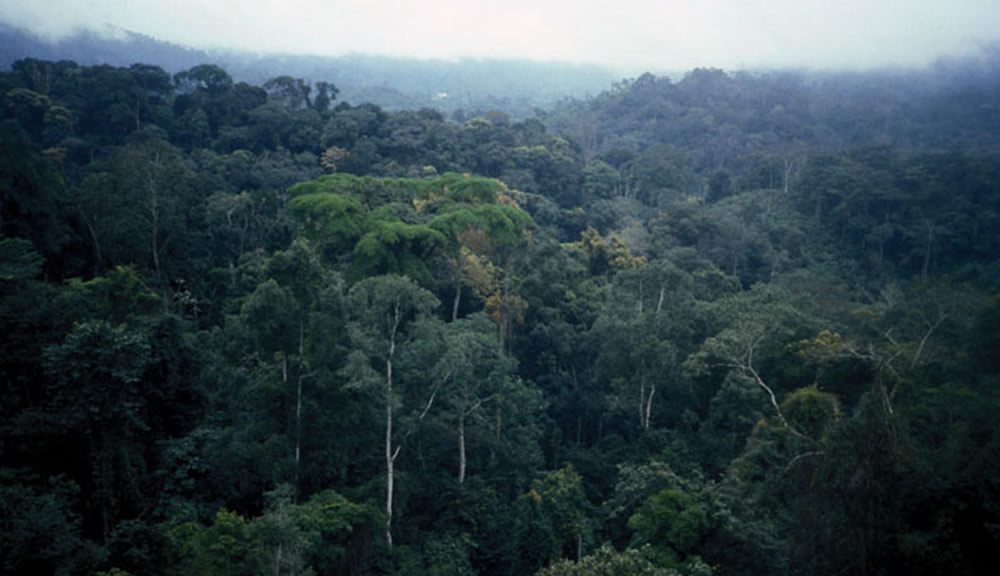 Mgahinga Gorilla National Park stands at high elevation amidst fog, at an altitude of between 2,227m and 4,127m. As its name suggests, it was created to protect and conserve the rare mountain gorillas that inhabit its dense forests, and it is also an important habitat for the endangered golden monkeys as well as being important for Uganda cultural & wildlife safaris, due to a huge cultural significance, in particular for the indigenous Batwa pygmies. This tribe of hunter-gatherers was the forest’s “first people”, and their ancient knowledge of its secrets remains unrivalled.
Mgahinga Gorilla national park is mainly a wonderful tourist destination to explore the three historical extinct volcanoes which form part of the spectacular Virunga ranges that lie along the border line of Uganda, Congo and Rwanda. Mgahinga Gorilla national park forms part of the bigger Virunga Conservation Area that incorporates adjacent parks in these countries, like Volcanoes national park, and Virunga national park in Rwanda and Congo respectively. The volcanoes’ slopes are surrounded by various ecosystems which are geographically diverse, and their peaks provide a striking backdrop to this beautiful scenery.
Gorilla trekking in Mgahinga Gorilla national park
 Mgahinga national park is located in southwestern Uganda on the edge with Congo and Rwanda. Covering an area of about 33.7 sq. kilometers, the park is a home to man’s closest primates, the mountain gorillas which roam about the whole forest in search of food. This park is one of the few places in the world where the rare mountain gorillas live and it attracts people from different continents for Uganda Gorilla tours.
One may wonder why Gorilla safaris must be done in Mgahinga and not other places but the secret behind it is that this park has a thick rain forest with a wide diversity of tree types, bird species, and a variety of wildlife, hence rendering a gorilla tracking encounter in Uganda an unforgettable adventure.
Mgahinga gorilla national park currently has only one habituated gorilla group / family, known as Nyakagezi family that comprises of up to nine members – i.e. 2 silverbacks, three females, two juveniles and two infants. The group is living under the leadership of silverback Bugingo who is over 50 years of age and father to most of the members in the group; Bugingo takes care of the young ones and their mothers, especially in providing security against external threats. However, this gorilla group is mobile and sometimes crosses into Rwanda and DRC (though it stabilized recently), so trekkers undertaking Uganda gorilla safaris are advised to always check for updates from Uganda Wildlife Authority or a tour operator about the location of the group before booking their gorilla permits.
Other popular attractions and activities in Mgahinga Gorilla national park;
 Birding tours; The most excellent birding tours in Uganda’s Mgahinga gorilla national park takes place in some of the most scenic places in the mountains – especially the gorge between Gahinga and Sabinyo mountains, in the course of the bamboo forest, and in the Montane forest, where the beautiful Rwenzori Turaco can be seen.
Despite of its small size, Mgahinga gorilla national park is also home to many other primate species other than the elusive mountain gorillas;
 The Golden monkeys; these are a special type of primates that are endemic to the Albertine Rift. Golden monkeys are identified by bright orange-gold body, cheeks and tail, contrasting with its black limbs, crown and tail end. Ideally, the golden monkey is arguably the dominant primate within this restricted forested park – with an estimated population of 3,000 – 4,000 individuals which tend to live in groups known as troops only in Mgahinga Gorilla National Park.
Hiking Mt. Gahinga
 This is an adventurous hike that begins from the Mgahinga National Park visitor’s Centre, located about 10 minute drive from Kisoro town.
This mountain is part of the Virunga massif which covers the 3 east African countries, including Rwanda, DR Congo and Uganda and it’s only here that one can be lucky to stand in these three countries at the same time, especially when hiking through the Sabyinyo trail, so spectacular!
The Garama cave; The 342m long Garama Cave lies beneath a plateau at the northern edge of the park, 3km from Ntebeko gate. It is set in the former farmland zone but in earlier times, the cave lied in the forest when it was occupied periodically by Batwa who used it as a council chamber and a retreat after raiding their neighbors. Today the cave provides an atmospheric performance of Batwa music at the end of the Batwa Trail.
This is one of the caves where once the Batwa warriors stayed and often raided their neighbors, the Bantu. The distance to the cave entrance from the park headquarters is 3 km long and it takes about 4 hours.
Read More
The Ik People Of Mount Morungole
Uganda has a great cultural significance, one of which is the remote tribe on the North-eastern side of Uganda within Kidepo Valley National Park. Visiting the Ik people on mount morungole is an exceptional and not just an ordinary and everyday experience. The people of this small tribe live high on mount Morungole in Kidepo Valley National Park at the border with Kenya. The peak of this Mountain is about 2749 meters, and the trail is about 8kms long /16km for a round trip and climbing to the peak and the villages is very challenging to those that are not physically fit.
 This is a tribe that is almost getting extinct and most people in Uganda have never heard of them. They became known when an American-British Anthropologist called Colin Turnbull published his book the “Mountain People” in 1972. This opened doors for tourists who wanted to discover about this small yet exceptional African tribe.
Interestingly, the entire tribe is comprised of between 10,000 and 11,00 people and it is believed that they were not natives of the area, but moved from Ethiopia, settled in Kenya for awhile then proceeded to Kidepo Valley National Park that they now call home.
 These interesting people used to be hunter-gatherers, but due to cattle raids from the Maasai, Pokot and Turkana of Kenya, Tuposa of South Sudan, and the Karamajong of Uganda, this ruined their livelihood and they abandoned cattle keeping hence opted for subsistence farming, goat rearing and bee keeping. This is also interesting because they use bee hives for paying dowry. As if the effect of cattle raining wasn’t enough torture for them, in the early 1960’s the government also interfered with their hunting-gathering lifestyle when the area they used to hunt and gather from was turned into a game reserve. Their desire was to live in peace, so they decided to migrate to Mount Morungole where they live in isolation up to today. Tourists who desire to see and interact with them can visit them from this Mountain.
 Because they were the first migrants into North-eastern Uganda, they always remind everyone who visits them that the tribe (Ik) means “head of migration” or the first people to migrate here. Visit them and you will go back totally moved and touched when you discover some of their traditions. Some of the amazing traditions include paying bride price/dowry using 5-10 beehives, goats, chicken and money instead of cattle as done by other tribes. They no longer rear cattle because they still fear being raided by the other pastoralist tribes surrounding them. The Ik children live with one another at a young age or with their grandparents. Polygamy is a normal and an everyday practice among the Ik people on this mountain. The shocking but true fact is that formal educating among these people is a new thing and within the entire tribe, there is only one lady who is currently at Kampala International University (KIU) and is soon being the first University graduate from the tribe.
 Much as climbing to the peak of the mountain is strenuous, the striking scenery of the mountain will leave you breathless and the valleys below and the Eastern Rift Valley in Kenya have the most breathtaking views. When you finally reach the scattered villages that comprise a community, you will experience hospitality to its fullest. One village is separated from the other by an outer fence made from thorny bushes and shrub cuttings entangled to make a protective fence. They greet you with a lot of warmth and excitement and traditional dances keep flowing like water. You will also get a chance to taste their traditional meals.
In conclusion, besides wildlife safaris in Uganda that have put the country on the World Map, interesting cultures like the Ik culture is still unexplored. A visit to these hospital and friendly people will leave you breathless and change you definition of adventure.
Read MoreVillage Life in Uganda
80 percent of the people in Uganda live in villages. The villages are made of small houses some times smaller than a garage. The houses in very rural parts of the country are made of mud and are thatched with grass.
There are now an increasing number of houses with corrugated iron roofs in many villages. The walls are constructed using reeds and sticks. Uganda has an extended family system
where other relatives and distant relations may sometimes live in the same house. Sometimes the small huts can house up to 12 or more people. The huts are divided into 2 sections, normally a curtain or wall.
The inner section is where every one will sleep and the outer part is where food is prepared and served. People sit on mats in a circle while eating and the food is placed in the middle where every one picks their share and eats with their hands. Some times if the family owns Chickens or goats, they will be kept in the same hut, in a small room attached to the main house.
A village fire place for cooking
There are no ceilings in the huts and the walls are often very dark stained by smoke from the cooking place although there are small holes for ventilation in the walls.
The corrugated iron houses are normally bigger in size and have more space. Most houses will have 1 or 2 bedrooms and the kitchen will be in a smaller building beside the main house.
A Small village house
The bathrooms are small rooms out side the house in most cases with a concreted floor. Plastic bowls are used to collect water which is then collected and thrown over your body using your hands. Sometimes one can pick up the bowl and tip the water over their head and then the water goes out through a small hall in the floor.
The toilet is outside the main house or hut. It is called a pit latrine, which is basically a deep pit covered with concrete or mud to make a hole in the ground.
The homes in the country are lit by paraffin candles called “Tadoobba”. This is because most homes have no access to Electricity.
Water in the villages
Water is normally collected from the well, river or spring. Fetching water is mainly done by the children and it is either in the mornings or evenings, because most of them will be away at school for most of the day.
Water is collected in plastic gallons and containers or sometimes in pots made of clay. The journey to the well is often long and involves climbing high hills and going through valleys. Sometimes the well or river is used by cattle keepers to water their animals so when collected by people, the water has to be boiled before use to kill any germs and remove any impurities.
In the recent years piped water has been introduced and can be pumped out of the ground using a water pump. Water pumps are still very few but are a better alternative for domestic water use.
Family life in the village
Polygamy is still common in Uganda where one man can marry more than one wife and as a result some families have very many children.
There is how ever a very strong sense of community in Uganda and raising children is seen as every one’s responsibility, it is not just left to the parents. The extended family system in Uganda is very strong.
Read MoreTop 5 Uganda Safari Options for Nature Lovers
Looking at impressive wildlife, chimpanzees and mountain gorillas on a Uganda safari holiday is surely one of the most amazing things you will always sing about for decades. However, there is much more like the lovely landscape, culture, great weather that you discover from your seat in a safari four wheel drive vehicle. Enjoy nature at its best with our best Uganda tour wildlife tours across the country and your experience will be your reward. Uganda a great place to experience nature and wildlife through the two travel seasons depending on your travel plans. The fact remains that the country has a lot to offer for interesting Africa vacation holidays, here are some Uganda safari options that make travelers admire the supreme spectacle of the natural destination.
Mountain Gorilla trekking Tours
Mountain gorillas have multiplied in number in the recent years according to researchers and conservationist in charge of all primate parks. Uganda was estimated to be a home to half of the remaining mountain gorillas in the world sharing the rest with Rwanda and Congo. For best gorilla tracking, Bwindi Forest national park offers great opportunities to tourists who would like to meet the gentle silver back giants in their natural home. There are 14 habituated gorilla families that can be visited by tourists.
Chimpanzee Tracking Adventures
But still you will be surprised that the country has over 5000 chimpanzees in Kibale forest, Queen Elizabeth national park, and Murchison falls National Park. If you are looking for chimpanzee safaris, Kibale Forest national park is the ultimate place to visit. Other amazing places where chimpanzee tracking is done are Kyambura Gorge and Kalinzu Forest in Queen Elizabeth National Park, Kaniyo Pabidi and Budongo Forest in Murchison Falls National Park.
Sighting them is a guarantee although one needs a minimum of four to five days. The best time for this trip is all year round since gorillas and chimpanzees can be seen any time once you chose to visit the pearl of Africa. If you want to spend more time with both gorillas and chimpanzees, better to track gorillas twice and also go for chimpanzee habituation instead of the trek.
Bird watching tours in Uganda
Don’t listen to anyone who says Uganda isn’t a fine bird watching destination because it’s one of the lucky bird watching paradises in Africa. Over half of all bird species in Africa can be found in Uganda making it the richest African birding destination. Hard to believe but a dedicated birding travelers can record around 300 bird species just within Kampala city the countries capital. Birders know it as a home to endemic birds and rare albertine hard to spot in other birding destination but bird watching tours in Uganda are simply the best to destinations like Bwindi, Kibale, Kidepo, Lake Mburo, Mgahinga Gorilla, Mt. Elgon, Murchison Falls, Queen Elizabeth, Mabamba, and many more. Most spotted species include Blue-headed Sunbird, Regal Sunbird, Strange Weaver, Dusky Crimson wing, Francolin, Rwenzori Turaco, Rwenzori Nightjar, African Green Broadbill, Yellow-eyed Black Flycatcher, Rwenzori Batis, Strip-breasted Tit, Purple-breasted Sunbird mention but a few without forgetting the unique rare Shoebill. Birding in Uganda combined with gorilla trekking, wildlife viewing is one of the classic safari tours Uganda offers.
Uganda wildlife safaris
Wildlife is one of best attractions travelers enjoy on their visit to Uganda a home to many natural wonders but Queen Elizabeth national park and Murchison falls national park for Uganda wildlife safaris. A visit to any of the parks reward you with fun game viewing experience to see the big five, hippos, crocodiles, chimpanzees, might falls, and the tree climbing lions that chill and relax in leisure up in tree branches. These are the main highlights of fantastic Uganda wildlife trips. The other major stops on the itinerary are the Uganda Equator, Ziwa Rhino sanctuary, Igongo cultural museum among others. Uganda wildlife trips need a minimum of 2 days but 3-5 days are good for leisure discoveries. However, some travelers find it nice visiting Murchison falls National Park, Queen Elizabeth National Park, Kibale forest National Park and Bwindi forest national park to see wildlife, chimpanzees and mountain gorillas.
Read More
Motor Rentals Makes Uganda Travel Easier
As mentioned before you may have known or read before – there is no activity that is risk free. Even renting a car is risky because you might encounter some losses. Apart from being risky, it often seems frustrating and tiresome to go on long trips in deep wildness of Uganda safaris. You may come across a scheduled place where cars don’t move that frequently. Under circumstances when you experience a breakdown in such places example in deep places of Kasese or Kabale in Uganda, you’ll be in serious trouble. You’ll rarely find professional mechanics or repair shops that can help repair your car at the odd hour of the night.
Motor Rentals in Uganda won’t cause any harassment for you or make you wait for long under a crisis. All you need to do in order to avail their services is to call up their number. These services ensure much of your mental peace when you’re going out on long vacations.
Decide quickly on car hire in Uganda and how you can escape out to different destinations with ease. You’ll often need to drive your car through roads with narrow space that you actually don’t favor. Your car is precious to your heart and you take utmost precaution to preserve it. These rough and clumsy lanes are often a cause of concern for you. Resting on the backseat of your car sets you on a relaxing mood; you’ll hardly enjoy your time while you’re on the driver’s seat. There are a few good options to enjoy your time while you’re relaxing on the backseat –
Read magazines or listening to music, Check out updated online information, Discussing business through your cell phone, Indulging in funny games and Watching a movie on your smart phone
Motor Rentals allow you to try out these things as you make good use of your traveling time.
Before your flight takes off at the airport, you may find a car rental service to pick you up from your destination. You won’t have to face any questions like that of other tourists, especially when you feel tired after a long journey. Without spending much of your valuable time over negotiations, you may head straightway to your hotel and save your breath for your forthcoming meeting or sightseeing.
Replacing any repaired car, making emergency trips, opting for outdoor tours, vacationing with loved ones, going out on international trips and business trips are reasons that compel you to consider opting for Motor rentals. Instead of driving your car, it is always beneficial to try some car hire online booking regardless of all facts and circumstances.
Eventually it will help reduce your repair and maintenance costs. In order to turn your tours more pleasurable, you’ll need to hire a car when taking a trip in Uganda. Prior to hiring car rental services, you must do a fair bit of car hire price comparison. Whenever you’re going out on your leisure vacation or business trip, you’ll need to be more careful about not causing extra exhaustion on your car.
Read More